Gum disease is one of the most common — and most underestimated — dental conditions in the world. It begins quietly, often without any pain, and progresses slowly over months and years. By the time many patients realize something is seriously wrong, the disease has already caused significant damage to the gums and underlying bone.
The encouraging news is that even advanced gum disease can be treated effectively. Periodontal surgery is a proven, targeted approach to restoring gum health, halting bone loss, and ultimately saving teeth that might otherwise be lost.
Understanding Gum Disease: From Gingivitis to Periodontitis
Stage 1: Gingivitis
Gingivitis is the earliest and most reversible stage of gum disease. It is caused by a build-up of plaque along and below the gum line. Signs include red, swollen gums that bleed when brushed. At this stage, a professional clean and improved home hygiene are usually sufficient to reverse the condition.
Stage 2: Periodontitis
When gingivitis is left untreated, it progresses to periodontitis. The infection spreads below the gum line, destroying the bone and connective tissue that hold teeth in place. Pockets form between the teeth and gums, becoming reservoirs for bacteria. Professional cleaning alone is no longer adequate — more advanced intervention is needed.
Stage 3: Advanced Periodontitis
At this stage, significant bone loss has occurred. Teeth may feel loose, shift in position, or become painful to bite on. Without treatment, tooth loss is inevitable.
Who Needs Periodontal Surgery?
- Patients with deep periodontal pockets that cannot be cleaned adequately with scaling alone
- Those with irregular bone contours resulting from bone loss
- Patients with gum recession that exposes tooth roots
- Individuals who have not responded sufficiently to non-surgical treatment
Common Periodontal Surgical Procedures
1. Flap Surgery (Pocket Reduction Surgery)
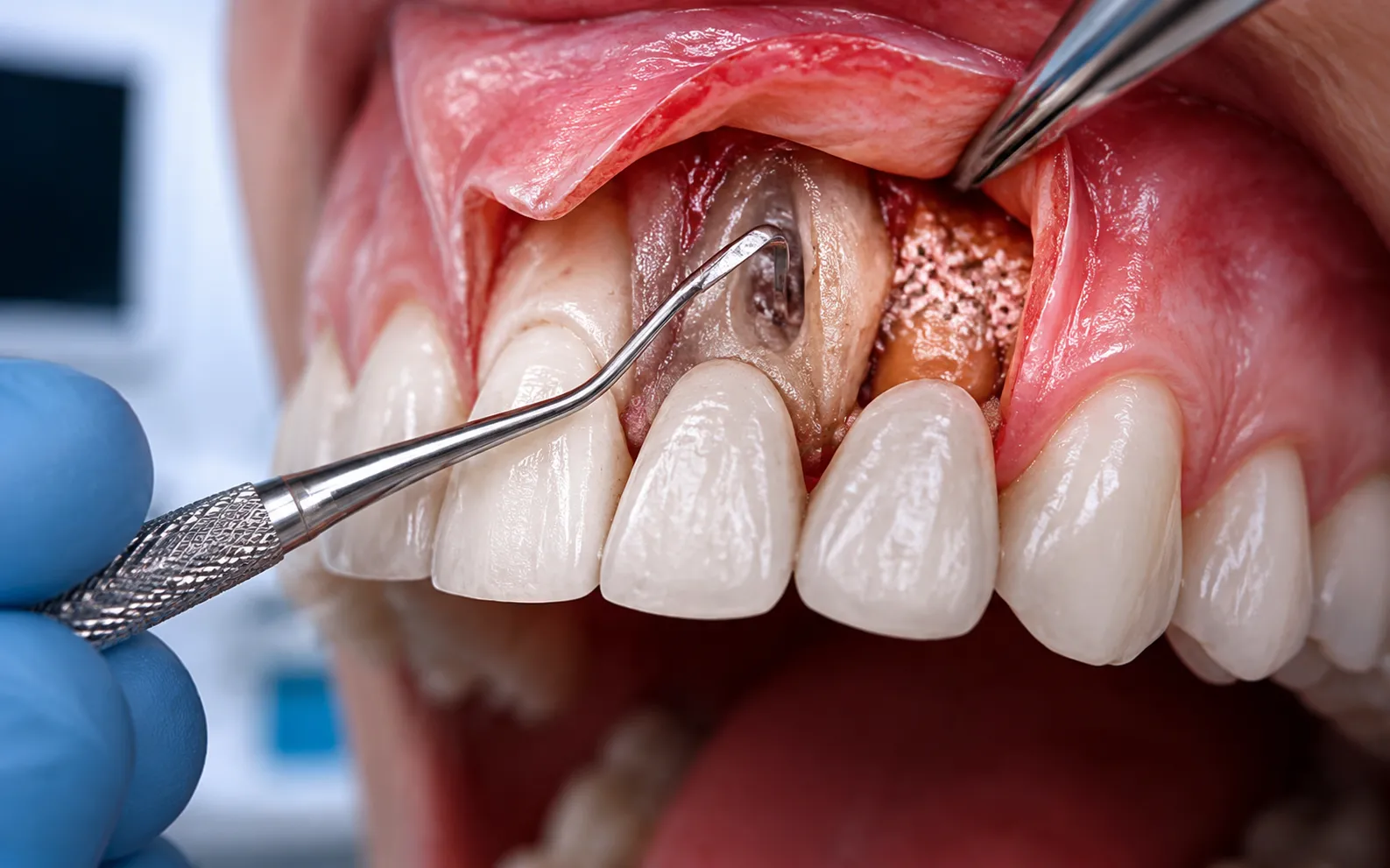
The gum tissue is gently folded back to allow thorough cleaning of the tooth roots and removal of infected tissue. Irregular bone surfaces are smoothed to eliminate areas where bacteria accumulate. The gum is then sutured back in place, reducing the pocket depth and making home care more effective.
2. Bone Grafting
When periodontal disease has caused bone loss, a bone graft can regenerate destroyed bone tissue. The graft material — which may be synthetic, donor-based, or from another area of the patient’s own body — serves as a scaffold for new bone growth.
3. Soft Tissue Grafts (Gum Grafts)
Gum recession exposes tooth roots, causing sensitivity and increasing the risk of decay. A soft tissue graft involves taking a small amount of tissue — usually from the roof of the mouth — and placing it over the exposed root surface, restoring the gum line and protecting the tooth.
4. Guided Tissue Regeneration (GTR)
A biocompatible membrane is placed between the bone and gum tissue, preventing fast-growing gum tissue from occupying the space and allowing bone to regenerate more effectively.
5. Crown Lengthening
When a tooth is broken off at or below the gum line, crown lengthening surgery reshapes the gum and bone to expose more of the tooth structure, making restoration possible.
The Connection Between Gum Disease and Systemic Health
Research consistently links periodontal disease to serious systemic conditions:
- Heart disease — Gum bacteria can enter the bloodstream and contribute to arterial inflammation
- Diabetes — Gum disease makes blood sugar harder to control, and diabetes worsens gum disease
- Stroke — People with periodontitis have a significantly elevated stroke risk
- Respiratory infections — Inhaling oral bacteria can affect lung health
- Adverse pregnancy outcomes — Gum disease is associated with premature birth and low birth weight
Recovery After Periodontal Surgery
- Mild discomfort and swelling for 2 to 3 days post-procedure
- Prescription pain relief and antibiotics may be provided
- Soft diet recommended for 1 to 2 weeks
- Avoid vigorous rinsing for the first 24 hours
- Full healing of gum tissue typically takes 6 to 8 weeks
📞 If your gums bleed, feel tender, or you have been told you have gum disease — do not wait. Early intervention saves teeth. Book a periodontal assessment today.
