
Do you snore loudly at night? Wake up with a headache every morning? Feel exhausted even after a full eight hours of sleep? These aren’t just minor inconveniences — they could be signs of Sleep Apnea, a condition that affects your heart, brain, and overall health far beyond just your quality of rest.
And here is the part that surprises most people: your dentist can play a major role in treating it.
What Is Sleep Apnea?
Sleep Apnea is a condition in which your breathing repeatedly stops and starts during sleep — sometimes hundreds of times a night. Each pause can last anywhere from a few seconds to over a minute, depriving your brain and body of oxygen.
The Three Types of Sleep Apnea:
- Obstructive Sleep Apnea (OSA) — The most common form. The throat muscles relax and block the airway.
- Central Sleep Apnea — The brain fails to send proper signals to the breathing muscles.
- Complex/Mixed Sleep Apnea — A combination of both.
Dentists are trained to screen and treat Obstructive Sleep Apnea, which accounts for approximately 85% of all cases.
Recognizing the Symptoms
- Loud, persistent snoring
- Waking up with a dry mouth or sore throat
- Morning headaches
- Excessive daytime sleepiness — no matter how long you slept
- Difficulty concentrating or remembering things
- Mood swings, irritability, or depression
- A partner who notices you stop breathing during sleep
How Can a Dentist Treat Sleep Apnea?
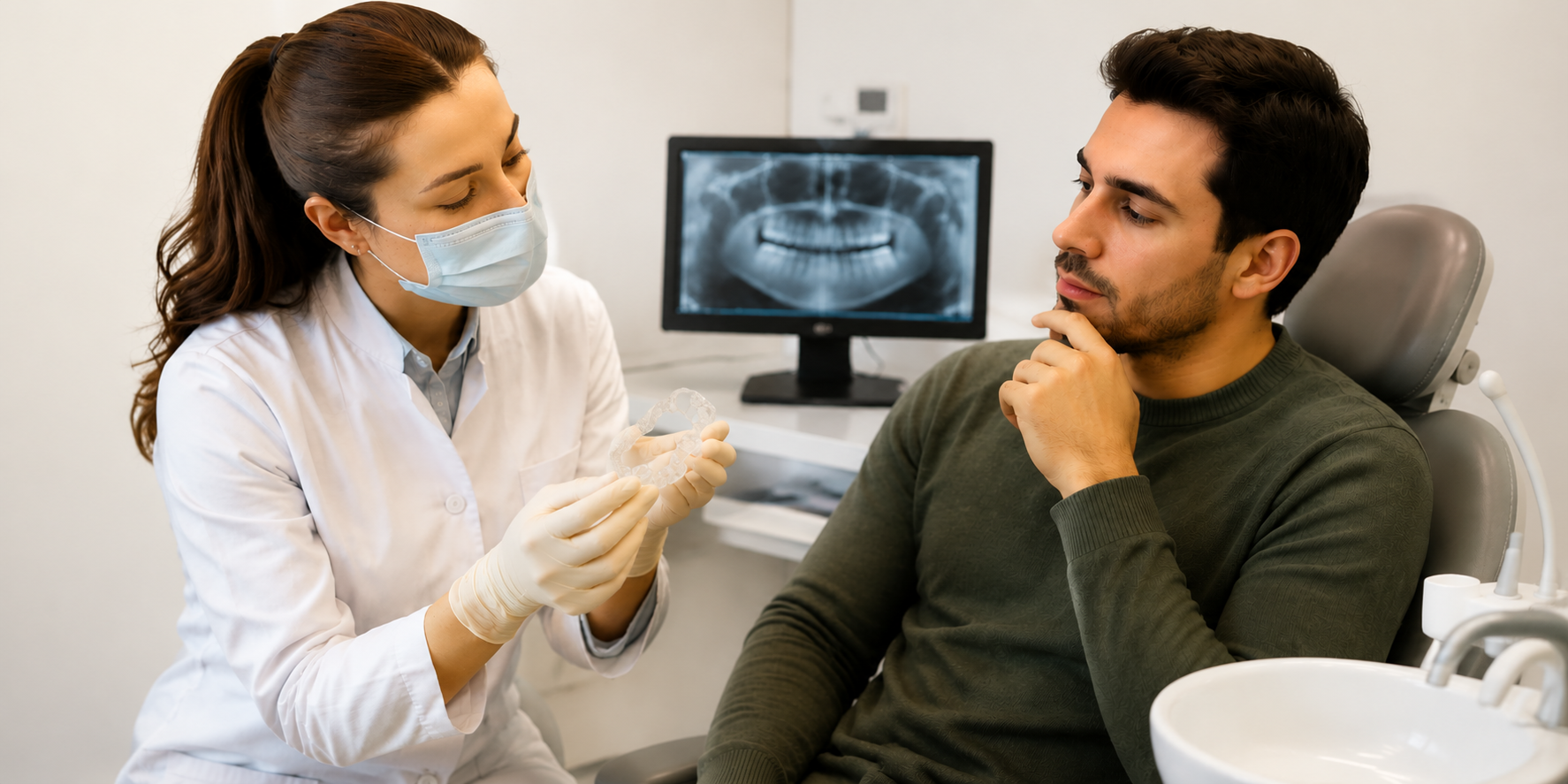
This is where dentistry and sleep medicine overlap in a meaningful way. Dentists who specialize in sleep-related breathing disorders offer a treatment called Oral Appliance Therapy (OAT) — a highly effective, non-invasive option that many patients find far more comfortable than a CPAP machine.
What Is Oral Appliance Therapy?
An oral appliance is a custom-fitted device — similar to a mouthguard — that you wear while you sleep. It works by gently repositioning the lower jaw slightly forward, which:
- Keeps the airway open
- Prevents the tongue from collapsing backward
- Reduces or eliminates apnea episodes
Why Many Patients Prefer It Over CPAP:
CPAP (Continuous Positive Airway Pressure) is the traditional go-to for Sleep Apnea, but studies show that between 46% and 83% of patients abandon it over time. The reasons are consistent:
- Uncomfortable mask and tubing
- Machine noise disturbs sleep
- Difficult to travel with
- Feelings of claustrophobia
An oral appliance fits in your pocket, makes no noise, and requires no electricity. For mild to moderate OSA, clinical research shows it is just as effective as CPAP — with a far higher compliance rate.
Who Is a Good Candidate for Oral Appliance Therapy?
- Adults with mild to moderate Obstructive Sleep Apnea
- Patients who are CPAP intolerant
- Those whose primary complaint is snoring
- Anyone with healthy teeth and gums
What Does the Treatment Process Look Like?
- Comprehensive oral exam and airway assessment
- Review of sleep study results (or referral for one if needed)
- Dental impressions or digital scans to custom-fit your device
- Fitting appointment and initial adjustments
- Follow-up visits to fine-tune and confirm effectiveness
Most patients notice a significant improvement in sleep quality within the first few weeks of consistent use.
📞 Think you or a loved one may have Sleep Apnea? Schedule a consultation today — comfortable, effective treatment is closer than you think.
