
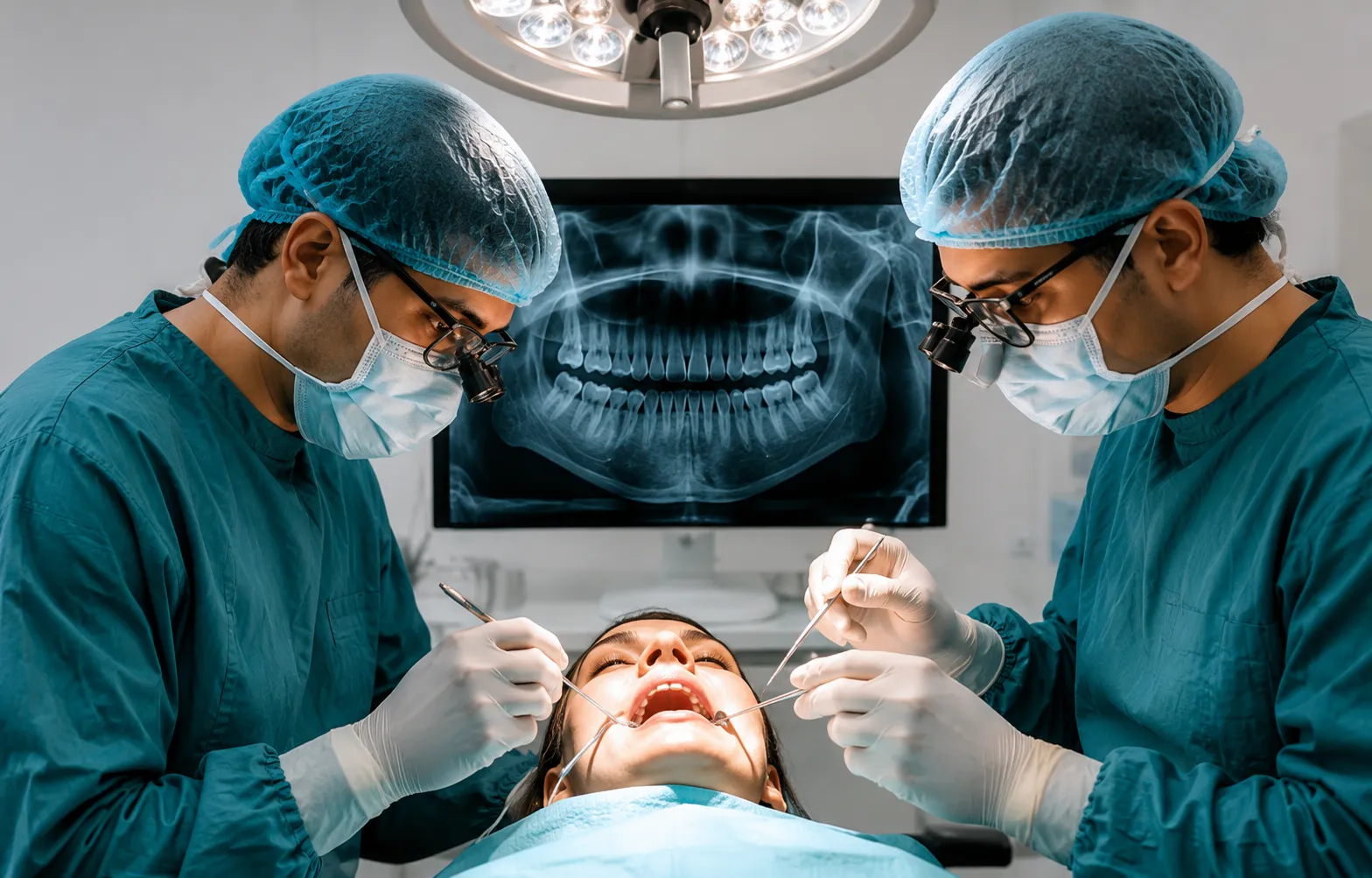
Most dental concerns can be managed with routine or conservative treatments — a filling, a crown, a professional clean. But there are situations where a more involved surgical approach is necessary to restore function, eliminate disease, or prepare the mouth for a long-term solution like a dental implant.
Advanced dental surgical procedures are performed in a safe, controlled clinical environment, often under local anaesthesia or sedation. Understanding what each procedure involves removes the uncertainty — and the anxiety — that many patients feel when surgery is recommended.
1. Dental Implant Placement
Dental implant surgery is one of the most transformative and commonly performed advanced dental procedures. A titanium implant post is placed directly into the jawbone in a minor surgical procedure, after which the bone gradually fuses around it (osseointegration) over a period of 3 to 6 months. A custom-made crown is then attached, completing the restoration.
- Single-stage or two-stage protocols depending on bone availability and clinical factors
- Performed under local anaesthesia — most patients report minimal discomfort
- Implants have a clinical success rate above 95% over 10 years
- The only tooth replacement option that preserves jawbone volume
- Full arch restorations (All-on-4, All-on-6) can replace an entire set of teeth with as few as four strategically placed implants
2. Bone Grafting
Bone grafting is often performed prior to or alongside implant placement when the jawbone has insufficient volume or density to support an implant. The graft provides a scaffold for the patient’s own bone to regenerate over time.
Types of Bone Grafts Used in Dentistry
- Autograft — Bone harvested from the patient’s own body (most biologically compatible)
- Allograft — Processed donor bone from a bone bank
- Xenograft — Bovine-derived bone mineral that is safe, processed, and widely used
- Alloplast — Synthetic bone substitute materials
Recovery from bone grafting requires 3 to 6 months for adequate integration before an implant can be placed.
3. Sinus Lift (Sinus Augmentation)
When upper back teeth are missing, the sinus cavity can expand downward over time, reducing the bone height available for implants. A sinus lift procedure adds bone between the jaw and the sinus membrane, creating the necessary height and density for implant placement.
- A standard, well-established procedure with excellent predictability
- May be performed simultaneously with implant placement when conditions allow
- Healing typically takes 4 to 9 months before implant loading
4. Socket Preservation
When a tooth is extracted, the surrounding bone begins to resorb (shrink) rapidly — sometimes losing 25% of its volume within the first three months. Socket preservation involves placing graft material into the extraction socket immediately after tooth removal, maintaining the bone volume needed for future implant placement.
This is a straightforward procedure performed at the time of extraction, requiring no additional surgery if implant placement is planned.
5. Apicoectomy (Root End Surgery)
When a root canal treatment fails or a persistent infection remains at the tip of a tooth root, an apicoectomy provides a surgical solution. The tip of the root and any infected tissue are removed through a small incision in the gum, and the end of the root is sealed. This procedure saves the tooth without removing it.
- Preserves a tooth that would otherwise require extraction
- Usually performed under local anaesthesia as a day procedure
- Recovery is typically 7 to 10 days
6. Orthognathic (Jaw) Surgery
Orthognathic surgery corrects significant skeletal discrepancies — when the upper and lower jaws do not align correctly due to growth abnormalities. It addresses conditions that cannot be resolved by orthodontics alone, such as:
- Severe overbite or underbite with skeletal causes
- Facial asymmetry affecting function or appearance
- Chronic jaw pain or TMJ dysfunction with skeletal origins
- Sleep apnea related to jaw positioning (in selected cases)
Orthognathic surgery is typically performed in conjunction with a course of orthodontic treatment before and after surgery, and is carried out in a hospital setting under general anaesthesia.
7. Temporomandibular Joint (TMJ) Surgery
When conservative treatments for TMJ disorders — such as splints, physiotherapy, and medication — do not provide sufficient relief, surgical intervention may be considered. Options range from minimally invasive arthrocentesis (joint lavage under local anaesthesia) to open joint surgery in complex cases.
Preparing for Dental Surgery: General Guidance
- Disclose all medical conditions, medications, and supplements to your dental surgeon
- Arrange for transportation home if sedation or general anaesthesia is involved
- Follow all pre-operative instructions including fasting requirements
- Plan for adequate rest in the first 24 to 48 hours post-surgery
- Stock soft foods in advance to support a comfortable recovery diet
- Attend all post-operative review appointments
Understanding Your Recovery
Recovery after dental surgery varies considerably depending on the procedure. Minor surgeries like socket preservation or apicoectomy involve very little downtime. Major procedures like orthognathic surgery require weeks of recovery. Your surgical team will provide detailed, personalised post-operative instructions and will be available to address any concerns throughout your healing.
📞 Have you been told you need dental surgery? Our experienced surgical team is here to guide you through every step — from assessment to recovery. Book your surgical consultation today.
