
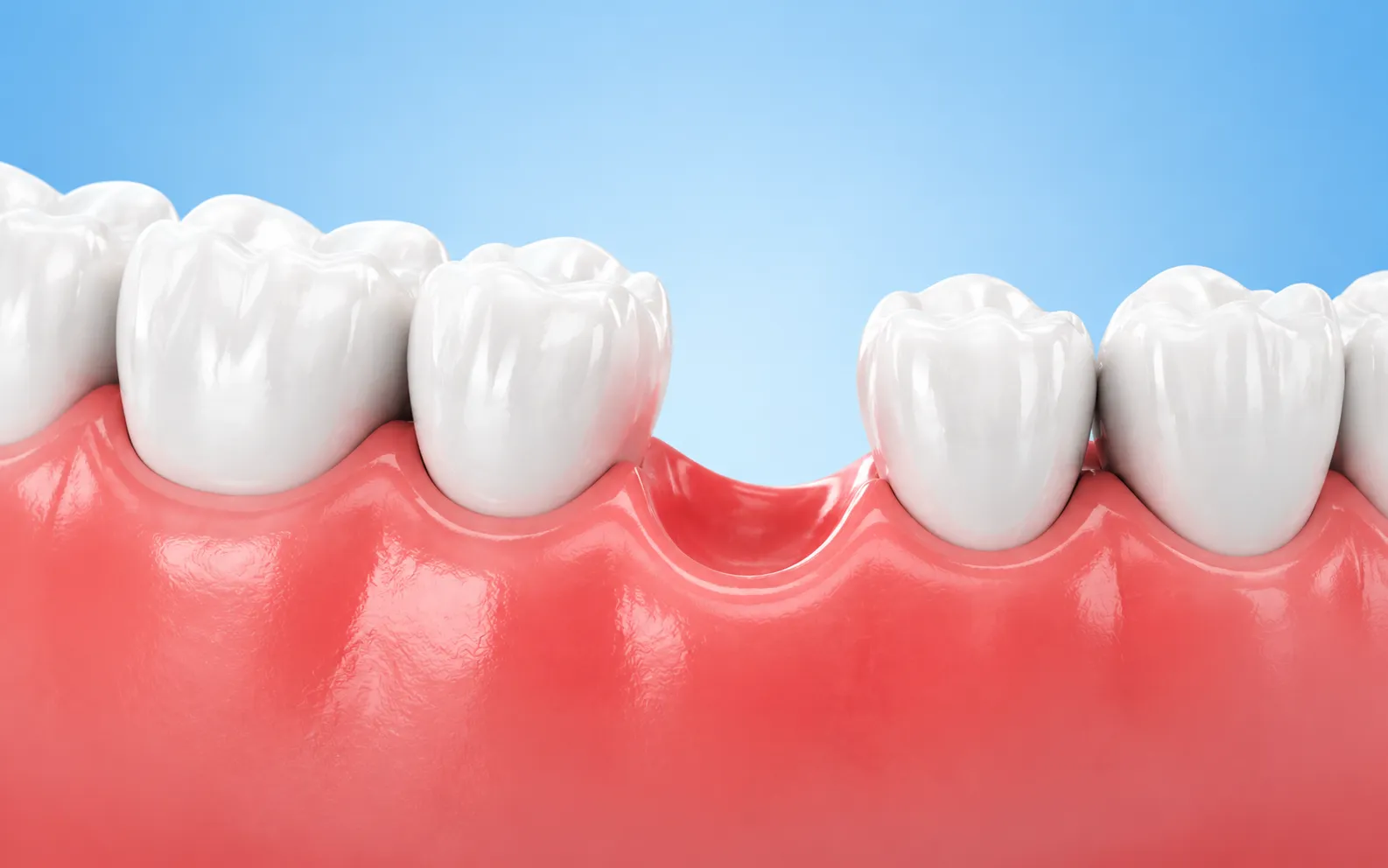
Losing a tooth — whether from decay, injury, or gum disease — affects far more than your appearance. Missing teeth change the way you bite and chew, cause neighbouring teeth to shift out of position, lead to jawbone loss, and can significantly impact your confidence and quality of life.
The good news is that modern dentistry offers several excellent replacement options. The right choice depends on how many teeth are missing, the condition of your jawbone and remaining teeth, your lifestyle, and your budget. Here is an honest comparison of each option.
Why Replacing Missing Teeth Is Non-Negotiable
- The jawbone requires stimulation from tooth roots to maintain its volume — without it, bone loss begins within months
- Adjacent teeth drift into the empty space, causing misalignment and bite problems
- Opposing teeth may over-erupt (shift upward or downward toward the gap)
- Speech can be affected, particularly when front teeth are missing
- Chewing becomes less efficient, impacting nutrition and digestion
Option 1: Dental Implants
Dental implants are widely regarded as the gold standard for tooth replacement — and for good reason. A titanium post is surgically placed into the jawbone, where it fuses with the bone over several months (a process called osseointegration). A custom crown is then attached on top, creating a restoration that looks, feels, and functions like a natural tooth.
Why Implants Stand Out
- The only replacement option that stimulates the jawbone, preventing bone loss
- Does not require altering adjacent healthy teeth (unlike a bridge)
- Long-lasting — implants can last 20 to 30 years or more with proper care
- No dietary restrictions — eat everything you would with natural teeth
- Highest long-term cost-effectiveness due to longevity
Who Are Implants For?
- Adults with one or more missing teeth
- Patients with sufficient jawbone volume (or who can undergo bone grafting)
- Non-smokers or patients willing to quit smoking during healing
- Those seeking a permanent, low-maintenance solution
Option 2: Dental Bridges
A dental bridge literally ‘bridges’ the gap left by a missing tooth. It consists of one or more artificial teeth (pontics) anchored to dental crowns placed on the adjacent natural teeth on either side of the gap.
- Completed in two appointments — no surgery involved
- More affordable upfront than implants
- Restores appearance and function effectively
- Fixed in place — does not need to be removed
The Trade-Off
To support the bridge, the neighbouring teeth must be filed down significantly. These healthy teeth are permanently altered and take on the structural load of the missing tooth. Bridges also do not prevent bone loss beneath the gap and typically need replacement after 10 to 15 years.
Option 3: Dentures
Dentures remain a reliable and widely used solution, particularly when multiple or all teeth are missing.
Complete Dentures
Replace an entire arch of missing teeth. They rest on the gum and are held in place by suction or dental adhesive. Modern dentures are considerably more natural-looking and comfortable than older versions.
Partial Dentures
Used when some natural teeth remain. They clip onto existing teeth and fill the gaps. Removable for cleaning.
Implant-Supported Dentures
A hybrid solution — dentures that are anchored to several implants in the jaw, providing significantly improved stability and preventing bone loss. An excellent option for patients who want the security of implants with the coverage of dentures.
Which Option Is Right for You?
- Single missing tooth with healthy neighbours? Implant is the best long-term choice
- Single missing tooth, budget constraints? A bridge is a reliable alternative
- Multiple missing teeth? Implants, a bridge spanning the gap, or a partial denture
- All teeth missing? Full dentures or implant-supported dentures
The best decision is made in consultation with your dentist, who will evaluate your bone health, oral condition, medical history, and personal priorities.
📞 Missing one or more teeth? Do not let it affect your health and confidence any longer. Book a tooth replacement consultation today and find the right solution for you.
