Receiving a Sleep Apnea diagnosis raises an immediate and practical question: what do I do now? For many patients, the next step is a prescription for a CPAP machine — and the next question after that is: is this really my only option?
The answer is no. There are three primary treatment paths for Sleep Apnea, each with distinct advantages, limitations, and ideal candidates. This guide will help you understand all three so you can have an informed conversation with your healthcare provider.
Option 1: CPAP Therapy
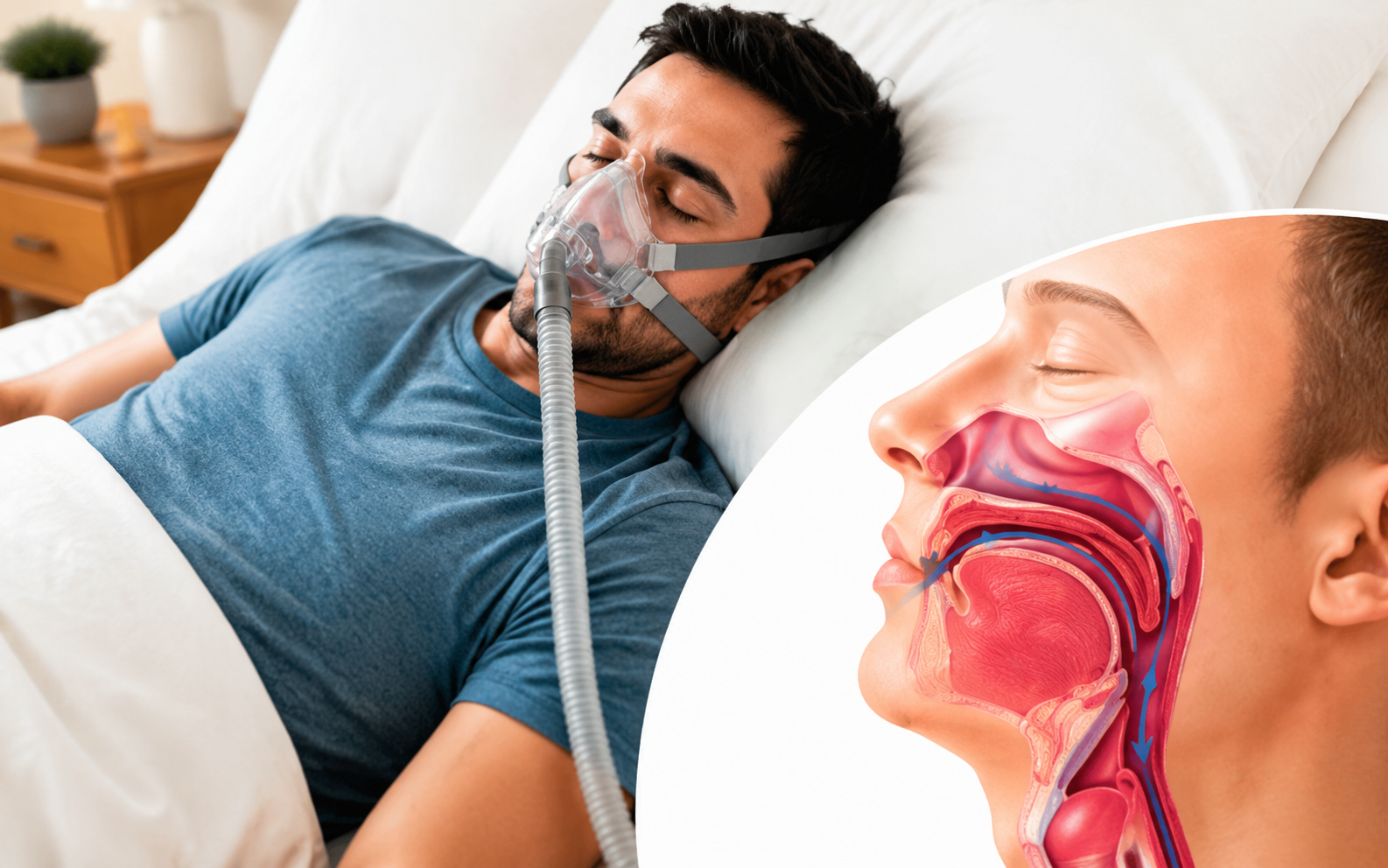
CPAP — Continuous Positive Airway Pressure — remains the most prescribed treatment for Sleep Apnea, particularly for moderate to severe cases.
How It Works
A mask worn over the nose or mouth and nose delivers a continuous stream of pressurized air, physically holding the airway open throughout the night and preventing apnea events.
Advantages of CPAP
- Effective across all severities of Obstructive Sleep Apnea
- Considered the gold standard for severe OSA
- Rapid symptom improvement when used consistently
- Extensively studied with a large body of supporting clinical evidence
Challenges with CPAP
- Mask discomfort and pressure intolerance
- Machine noise can disrupt sleep for both the patient and their partner
- Cumbersome to travel with — requires the machine, humidifier, tubing, and mask
- Common side effects include dry mouth, skin irritation, and nasal congestion
- Long-term compliance is a significant issue: studies report 46 to 83% of patients discontinue use
Option 2: Oral Appliance Therapy — The Dental Solution
Oral Appliance Therapy is provided by trained dentists and has grown substantially in clinical recognition over the past decade.
How It Works
A custom-fabricated device — resembling a mouthguard — is worn during sleep. It works by advancing the lower jaw slightly forward, which prevents the tongue and soft tissues from collapsing into the airway.
Advantages of Oral Appliance Therapy
- Small, silent, and portable — fits easily in a travel bag or bedside drawer
- No mask, no tubing, no machine noise
- Compliance rates of 85 to 90% — significantly higher than CPAP
- Clinically proven to be as effective as CPAP for mild to moderate OSA
- The preferred treatment for CPAP-intolerant patients per the American Academy of Sleep Medicine
- Easy to combine with positional therapy and lifestyle changes
Limitations of Oral Appliance Therapy
- May not be sufficient as a standalone treatment for severe OSA
- Some patients experience initial jaw discomfort or increased saliva production, which typically resolves with adjustment
- Requires regular dental follow-ups and periodic device adjustments
- Over-the-counter devices are not recommended — effectiveness depends on custom fabrication
Option 3: Surgical Intervention
Surgery is generally considered when other treatments have failed or when a specific anatomical abnormality is clearly contributing to the problem.
Common Surgical Procedures
- UPPP (Uvulopalatopharyngoplasty) — Removes or reshapes excess tissue in the throat
- Inspire Therapy (Hypoglossal Nerve Stimulation) — An implanted device that stimulates the airway muscles during sleep
- Maxillomandibular Advancement (MMA) — Repositions the upper and lower jaw to permanently enlarge the airway
- Nasal Surgery — Corrects structural issues such as a deviated septum that contribute to obstruction
Realistic Expectations for Surgery
- Success rates vary considerably depending on the procedure and patient anatomy
- Recovery can be prolonged and uncomfortable
- Carries the inherent risks of any surgical procedure — bleeding, infection, anesthesia complications
- Generally recommended only after conservative treatments have been trialed and failed
Side-by-Side Comparison
Ease of Use: Oral Appliance > CPAP > Surgery
Long-Term Compliance: Oral Appliance > CPAP > Surgery
Effectiveness for Severe OSA: CPAP > Oral Appliance > Surgery (variable)
Cost: Surgery > CPAP > Oral Appliance
Portability: Oral Appliance > CPAP > Surgery (N/A)
Invasiveness: Surgery > CPAP > Oral Appliance
Lifestyle Changes That Support Any Treatment
Regardless of which treatment path you pursue, these evidence-based lifestyle adjustments can meaningfully reduce Sleep Apnea severity:
- Weight loss — Even a 10% reduction in body weight can reduce Sleep Apnea severity by up to 25%
- Positional therapy — Sleeping on your side rather than your back reduces airway collapse
- Reducing alcohol consumption — Alcohol relaxes the throat muscles that maintain airway patency
- Quitting smoking — Smoking causes upper airway inflammation that worsens obstruction
- Maintaining consistent sleep and wake times
Which Treatment Is Right for You?
The best treatment is the one you will actually use consistently. As a general guideline:
- Mild to moderate OSA — Oral Appliance Therapy is an excellent first-line option
- CPAP intolerance — Oral Appliance Therapy is the recommended alternative
- Severe OSA — CPAP remains the primary recommendation, sometimes in combination with an oral appliance
- Identifiable anatomical obstruction — Surgical evaluation may be warranted
The decision should always be made in consultation with a qualified dental or medical professional following a proper sleep study and clinical assessment.
📞 Our dental practice offers expert Sleep Apnea evaluation and custom oral appliance fabrication. Contact us today to schedule your consultation.
