
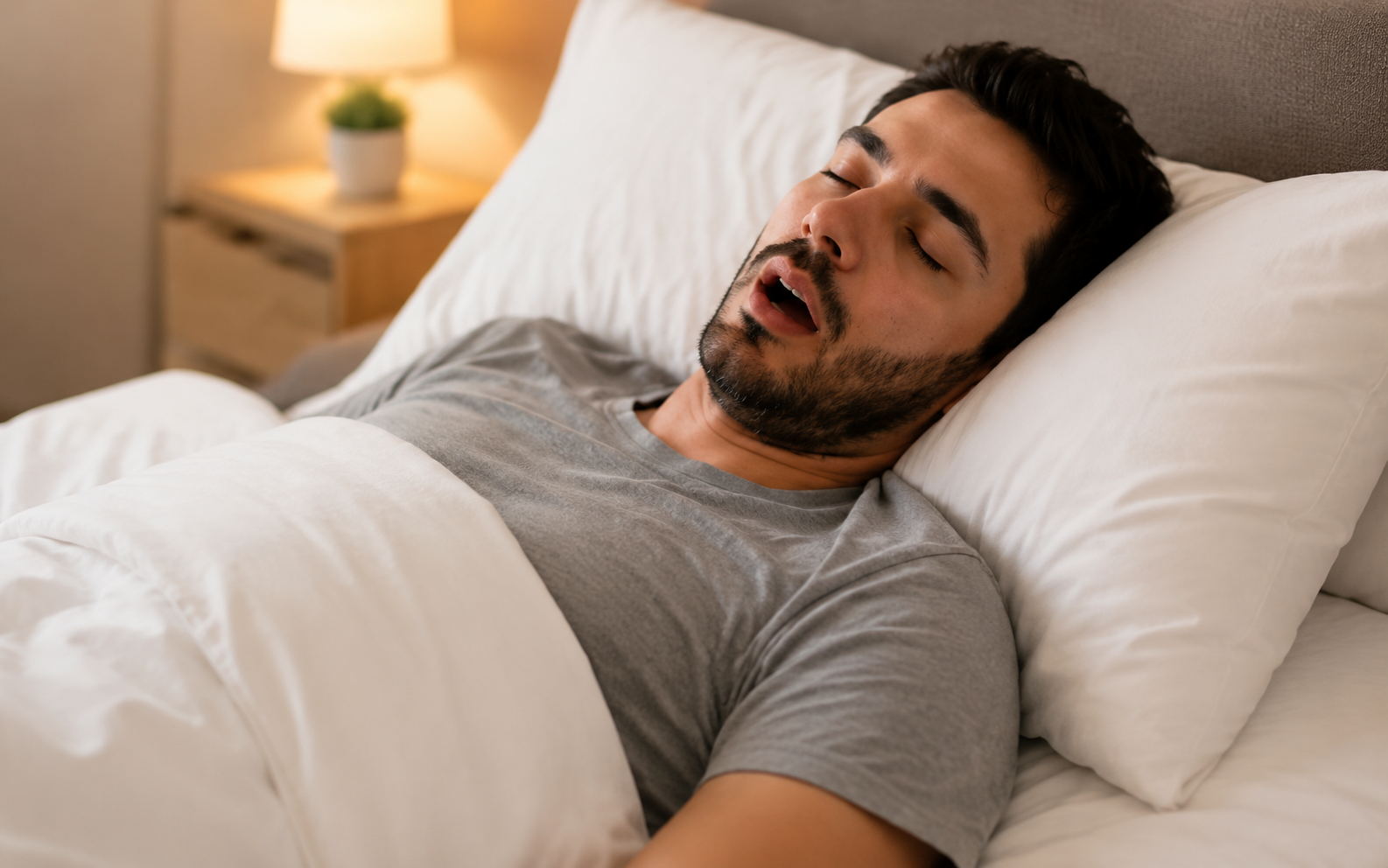
Most people dismiss snoring as a harmless quirk — something to joke about, not worry about. But snoring can be one of the earliest warning signs of Sleep Apnea, a disorder that, if left untreated, increases your risk of heart disease, stroke, diabetes, and serious accidents.
The most dangerous aspect of Sleep Apnea is how easy it is to overlook. Many people live with it for years without ever receiving a diagnosis. The signs are there — but they are often mistaken for stress, aging, or simply being out of shape.
Here are seven warning signs that deserve your full attention.
Warning Sign 1: Loud, Chronic Snoring
Occasional snoring is normal. Chronic, disruptive snoring is not. If your snoring is loud enough to wake others in the room, or if you wake yourself up snoring, it is a strong indicator that your airway is being partially obstructed during sleep — the hallmark of Obstructive Sleep Apnea.
Warning Sign 2: Witnessed Breathing Pauses
This is the most telling sign. If your partner or a family member has noticed that you stop breathing during sleep — even for just a few seconds — and then startle awake with a gasp or choking sound, this is almost certainly Sleep Apnea. During these pauses, your oxygen levels drop, placing immediate stress on your cardiovascular system.
Warning Sign 3: Waking Up with Headaches
Do you start most mornings with a dull, frontal headache? When oxygen levels fall repeatedly throughout the night, blood vessels in the brain dilate in response. This vascular reaction is a direct cause of the classic Sleep Apnea morning headache, which typically fades within a few hours of waking.
Warning Sign 4: Excessive Daytime Sleepiness
This goes beyond feeling a little tired after a poor night’s sleep. If you find yourself struggling to stay awake during meetings, dozing off while watching television, or feeling a genuine danger of falling asleep at the wheel — that is Excessive Daytime Sleepiness (EDS), a defining symptom of Sleep Apnea.
The reason is simple: even if you spend eight hours in bed, your brain is being woken dozens or hundreds of times a night to restart your breathing. You are never completing the full, restorative sleep cycles your body needs.
Warning Sign 5: Memory Problems and Brain Fog
Chronic oxygen deprivation during sleep takes a measurable toll on cognitive function. Patients frequently report:
- Forgetting names, appointments, or recent conversations
- Struggling to focus on tasks
- Slower reaction times
- A persistent mental fog that does not lift even after caffeine
These symptoms are often attributed to stress or aging — when the true culprit is untreated Sleep Apnea.
Warning Sign 6: Mood Swings, Irritability, or Depression
Sleep is not merely physical rest — it is when the brain regulates emotion and restores neurotransmitter balance. When Sleep Apnea prevents you from reaching deep, restorative sleep stages, serotonin and dopamine levels are disrupted. Research indicates that people with untreated Sleep Apnea are two to three times more likely to develop clinical depression and anxiety.
Warning Sign 7: Frequent Nighttime Awakenings or Nocturia
If you find yourself waking two or more times each night — either from general restlessness or to use the bathroom — this may not be a bladder issue. When the body is repeatedly roused by apnea events, it can trigger the release of a hormone that signals the kidneys to produce more urine. Treating the Sleep Apnea often resolves the nocturia as well.
What Happens If Sleep Apnea Is Left Untreated?
- High blood pressure resistant to medication
- Significantly increased risk of heart attack and stroke
- Development or worsening of Type 2 Diabetes
- Weakened immune system
- Increased risk of serious accidents at work or while driving
- Accelerated cognitive decline
Your Dentist Can Help
Many patients are surprised to learn that dentists are trained to screen for Sleep Apnea and provide highly effective treatment. During a routine dental visit, your dentist can identify anatomical signs — such as jaw structure, tongue size, and palate shape — that may indicate a risk for airway obstruction. Custom oral appliances offer a comfortable, CPAP-free path to better sleep.
📞 Do any of these warning signs sound familiar? Do not wait. Our dental clinic offers Sleep Apnea screening — book your appointment today.
